
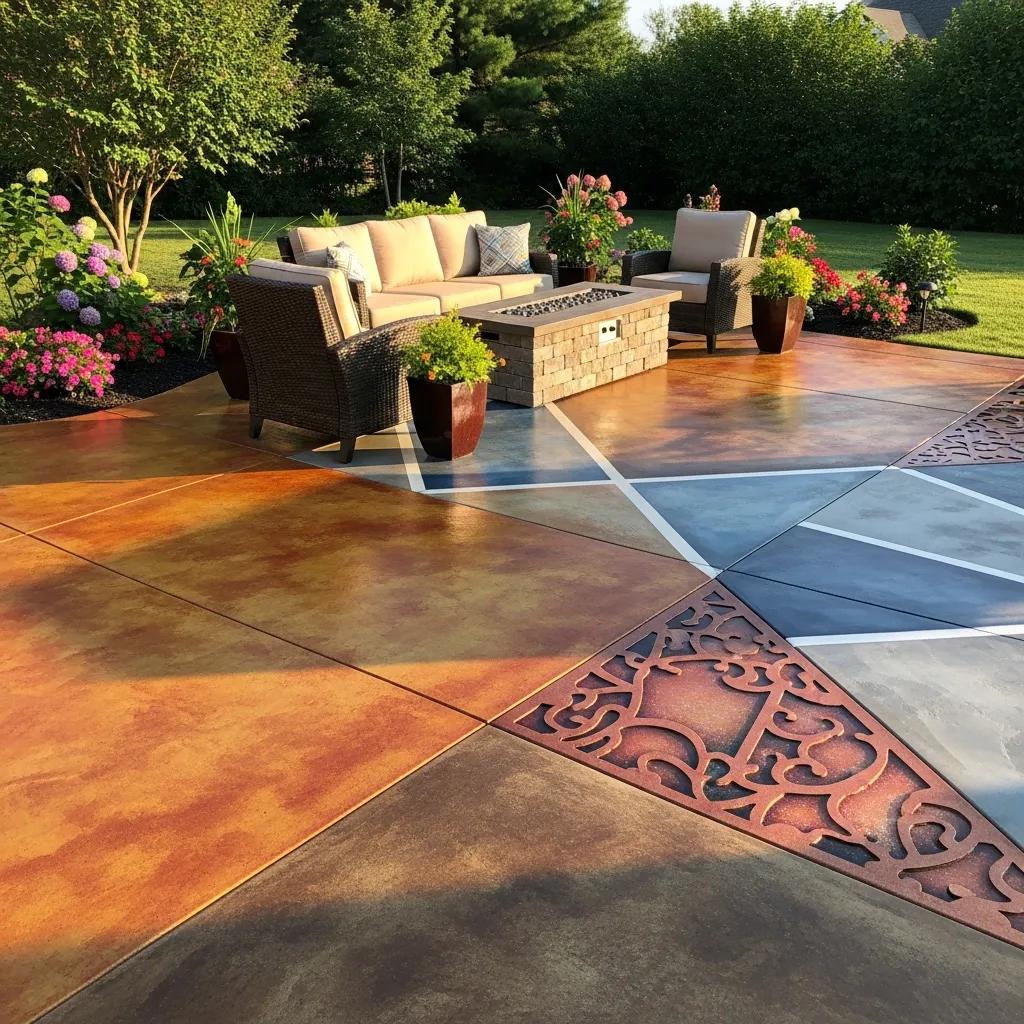
Transform Your Home with Residential Concrete Staining
If you are looking to elevate the look of your property, residential concrete staining is an exceptional way to transform plain gray slabs into durable and visually refined finishes. This innovative process not only improves your home’s overall aesthetics but also enhances surface performance while significantly reducing maintenance requirements. Homeowners who desire a perfect balance of high-end appearance and everyday functionality frequently choose this tailored solution. In this article, we will examine the benefits, costs, and specific techniques involved, while explaining why professional application is key to achieving the best possible outcomes for your living space.
Benefits of Concrete Staining:

Concrete staining delivers several advantages that improve both appearance and long-term performance for residential properties.
- Aesthetic Appeal : Staining can dramatically change the look of concrete, allowing for a variety of colors and finishes that can complement any home design.
- Durability : Stained concrete is resistant to wear and tear, making it suitable for high-traffic areas both indoors and outdoors.
- Low Maintenance : Unlike traditional flooring options, stained concrete requires minimal upkeep, saving homeowners time and money.
For those considering concrete staining, Valor Concrete Company provides professional services to deliver a precise finish that enhances a home’s aesthetic and market value.
Requesting professional quotes yields precise estimates. Valor Concrete Company can provide detailed assessments tailored to specific project requirements.
Techniques for Concrete Staining:

Multiple staining techniques exist, each producing distinct aesthetic and performance outcomes.
- Acid Staining : This method uses a chemical reaction to create a translucent color that enhances the natural variations in the concrete.
- Water-Based Staining : A more environmentally friendly option, water-based stains provide a wide range of colors and are easier to apply.
- Custom Blending : For a truly unique look, custom blending allows homeowners to mix different stains to achieve a personalized finish.
Techniques are adaptable to specific design objectives and site conditions.
Key Benefits of Concrete Staining for Your Home
Concrete staining delivers key residential benefits:
- Increased Curb Appeal : A well-stained concrete surface can significantly enhance the exterior appearance of a home, making it more inviting.
- Durability & Longevity : Stained concrete is less prone to chipping and cracking, ensuring that it maintains its beauty over time.
- Custom Design Options : Homeowners can choose from a variety of colors and finishes, allowing for a personalized touch that reflects their style.
These advantages represent a durable, value-driven investment for homeowners.
How Does Concrete Staining Enhance Durability and Aesthetic Appeal?
Staining penetrates the substrate to form a stabilising, stain-resistant finish that prolongs service life. The resulting appearance can emulate higher-cost materials such as stone or tile. UV-resistant sealants preserve color stability and maintain the visual performance of the surface over time.
Why Is Concrete Staining a Cost-Effective Solution Compared to Alternatives?
Due to low maintenance and extended service life, stained concrete is often more cost-effective than alternative floor coverings. Reduced need for replacement or refinishing yields long-term savings for budget-conscious homeowners.
Research indicates acid staining provides a decorative and cost-effective option for concrete floors.
Acid Staining for Decorative & Cost-Effective Concrete Floors
The study notes that acid staining may be reapplied to the same concrete surface without damaging the substrate and at relatively low cost. It presents concrete as a decorative finish when acid staining is employed.
Study of Acid-Stained Concrete Flooring and its Effect on Compressive Strength of Concrete, A Ahmed, 2024
Which Types of Concrete Stains Are Best Suited for Home Applications?
When selecting a stain for residential use, homeowners should consider the following types:
- Acid-Based Stains : Ideal for creating rich, variegated colors that enhance the natural beauty of concrete.
- Water-Based Stains : Offer a broader color palette and are easier to work with, making them suitable for DIY projects.
- Custom Options : Homeowners can explore custom blends to achieve a unique look tailored to their specific design preferences.
These options offer flexibility to achieve the intended aesthetic.
What Are the Differences Between Acid and Water-Based Stains?
Recognising the distinctions between stain types is essential for informed selection:
- Application Methods : Acid stains require a more complex application process due to their chemical nature, while water-based stains are easier to apply.
- Durability : Acid stains typically offer greater durability and resistance to fading compared to water-based options.
- Aesthetic Differences : Acid stains create a more natural, mottled appearance, whereas water-based stains provide a uniform color.
These distinctions assist homeowners in matching product selection to performance and aesthetic requirements.
How Do Concrete Stain Colors Influence Home Design and Ambiance?
Stain color strongly influences spatial perception and atmosphere. Lighter tones can make spaces feel larger and brighter, while darker shades create warmth and intimacy. Color selection should coordinate with furniture, finishes, and landscaping to reinforce the overall design intent.
Creative application techniques further broaden design possibilities, enabling distinctive concrete installations across hardscape and flooring schemes.
Creative Concrete Staining for Unique Home Designs
Combined with targeted application techniques, stains enable unique concrete installations that complement diverse hardscape and flooring designs.
Coloring Stains for Concrete, 2009
How Is the Concrete Staining Process Performed for Optimal Results?
The staining process comprises key procedural steps to ensure optimal results:
- Surface Preparation : Proper cleaning and preparation of the concrete surface are essential for adhesion and durability.
- Application Techniques : Stains can be applied using various methods, including spraying, rolling, or brushing, depending on the desired effect.
- Curing and Sealing : After staining, a sealant is applied to protect the surface and enhance the color.
Adherence to these steps produces a durable, high-quality finish.
Why Should Homeowners Choose Professional Concrete Staining Services?
Engaging professional contractors yields several advantages:
- Quality Workmanship : Experienced contractors ensure that the staining process is done correctly, resulting in a flawless finish.
- Expertise : Professionals understand the nuances of different stains and techniques, allowing them to recommend the best options for your project.
- Long-Term Results : Proper application and sealing by experts can extend the lifespan of the stained surface, providing better value for your investment.
Selecting a professional provider such as Valor Concrete Company supports superior application and long-term performance.
What Are the Maintenance Requirements and Longevity Expectations of Stained Concrete?
Stained concrete requires minimal maintenance: routine cleaning with a mild detergent and periodic resealing every few years will preserve the protective layer and color vibrancy. With appropriate care, stained concrete can provide decades of reliable service.
How Long Does Concrete Staining Last Under Residential Use?
Service life depends on stain quality and maintenance practices. With proper care, stained concrete typically endures 10 to 30 years or more. Factors such as foot traffic, environmental exposure, and the selected sealant influence longevity.
What Are the Recommended Maintenance Practices to Preserve Stain Quality?
To preserve the quality of stained concrete, homeowners should follow these maintenance practices:
- Regular Cleaning : Use a soft broom or mop to remove dirt and debris, and clean with a mild detergent as needed.
- Resealing : Apply a high-quality sealant every 2-3 years to protect the surface and maintain color.
- Prompt Repairs : Address any cracks or damage immediately to prevent further deterioration.
Implementing these measures sustains aesthetics and function over time.
How Does Concrete Staining Compare to Painting and Other Surface Treatments?
Compared to paint and other surface treatments, staining offers several advantages:
- Durability : Stains penetrate the concrete, providing a more durable finish that resists chipping and peeling.
- Natural Appearance : Stains enhance the natural beauty of concrete, while paint can create a uniform, artificial look.
- Maintenance : Stained surfaces require less maintenance than painted ones, which may need frequent touch-ups.
For these reasons, stained concrete is often preferable for residential applications.
What Are the Advantages of Concrete Staining Versus Painting?
Staining provides specific advantages over paint:
- Longer Lifespan : Stains can last significantly longer than paint, reducing the need for frequent reapplication.
- Enhanced Aesthetics : Stains offer a more natural look that highlights the texture and character of the concrete.
- Lower Maintenance : Stained surfaces are easier to maintain, requiring less frequent cleaning and upkeep.
These factors contribute to the increasing adoption of staining among homeowners.
When Is Concrete Staining Preferable Over Epoxy or Sealants?
Staining is preferable to epoxy or heavy sealants when aesthetic integration is the primary objective. Stains produce a natural, site-specific appearance, while epoxy coatings tend to produce an industrial finish. Additionally, staining generally requires less complex application and maintenance in residential contexts.
What Are the Typical Costs Involved in Concrete Staining for Homes?
Typical costs vary by project scope, but homeowners can expect to pay between $2 and $4 per square foot for professional staining services.
Which Factors Influence the Overall Concrete Staining Cost?
Several factors can influence the overall cost of concrete staining:
- Material Choices : The type of stain selected can significantly impact the price, with acid-based stains generally being more expensive than water-based options.
- Project Size : Larger areas will naturally incur higher costs due to increased material and labor requirements.
- Labor Costs : Hiring experienced professionals may result in higher upfront costs but can lead to better long-term results.
Awareness of these drivers enables accurate budgeting for staining projects.
How Can Homeowners Obtain Accurate Quotes for Concrete Staining Services?
To obtain accurate quotes for concrete staining services, homeowners should follow these steps:
- Contacting the Company : Reach out to professional services like Valor Concrete Company to discuss your project.
- Initial Consultation : Schedule a consultation to assess the area and discuss design preferences.
- Discussing Project Details : Provide specific details about the desired stain type, area size, and any special requirements to receive a tailored quote.
Following this process produces tailored, competitive proposals for concrete staining.
Frequently Asked Questions
What is the difference between concrete staining and concrete sealing?
Staining and sealing serve distinct functions. Staining alters color by penetrating the substrate to produce a coloured finish; sealing applies a protective barrier against moisture, stains, and abrasion. Both processes are commonly applied in sequence to maximise durability and appearance.
Can I stain my concrete myself, or should I hire a professional?
Although DIY staining is possible, professional engagement is recommended for optimal results. Contractors possess the expertise to prepare surfaces correctly, select appropriate stains, and apply products to achieve uniform coverage. They also provide guidance on maintenance and sealing to extend service life. If you elect a DIY approach, adhere strictly to preparation and application specifications.
How does weather affect the concrete staining process?
Weather conditions significantly influence staining outcomes. Ideal conditions are dry, temperate weather—approximately 50°F to 90°F—with low humidity. Excessive heat accelerates drying and can cause uneven coverage; cold or wet conditions impede adhesion and curing. Schedule staining when weather conditions meet recommended parameters to ensure consistent results.
What types of surfaces can be stained?
Staining applies to interior floors, patios, driveways, and walkways. It is suitable for new and existing concrete provided the surface is clean and properly prepared. Previously painted or coated surfaces may require additional preparation to ensure adhesion. Consult a professional to determine the appropriate approach for each surface type.
Are there any environmental concerns with concrete staining?
Concrete staining is generally considered environmentally favourable, particularly when using water-based stains that exhibit lower volatile organic compound (VOC) levels than solvent-based alternatives. Proper disposal of residual materials and measures to prevent runoff are necessary to avoid local water contamination. Specify eco-friendly products and practices where feasible.
How can I choose the right color for my concrete stain?
Choosing the right color requires consideration of the home’s overall design, existing landscaping, and intended atmosphere. Obtain sample swatches and perform test applications on a small area under varied lighting conditions. Lighter tones will visually expand a space; darker tones introduce warmth and intimacy.
What should I do if my stained concrete gets damaged?
Prompt action mitigates further deterioration. Minor scratches or scuffs often respond to cleaning and resealing; more significant damage may require patching and re-staining of the affected area. Consult a professional to assess damage and recommend the appropriate repair method to restore appearance and integrity.
Conclusion
Concrete staining enhances both the aesthetic appeal and durability of residential surfaces. The method delivers a low-maintenance, long-lasting finish that can increase property value. For optimal results, consider enlisting the expertise of professionals like Valor Concrete Company to ensure a precise application. Explore available services to evaluate the suitability of concrete staining for your home.