
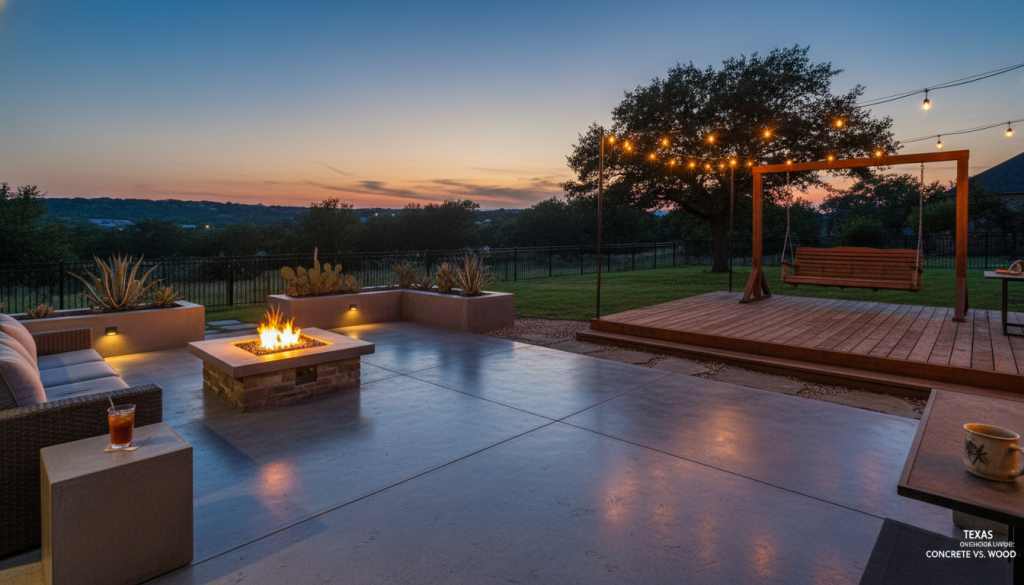
When homeowners evaluate concrete vs wood Texas outdoor living solutions, the decision often balances immediate visual appeal against decades of structural resilience. In 2026, the landscape of home improvement has shifted due to fluctuating material costs and a growing emphasis on sustainable, long-lasting investments. For residents in San Antonio and the surrounding Hill Country, the local climate is the ultimate judge of any outdoor construction project.
Texas is famous for its punishing sun, sudden torrential downpours, and expansive clay soils that can wreak havoc on rigid structures. Choosing between a concrete patio and a wooden deck is no longer just a matter of aesthetics; it is a complex financial and engineering decision. This analysis explores the nuances of San Antonio patio cost, maintenance requirements, and how different materials stand up to the unique challenges of the Lone Star State.
The Texas Climate: A Trial by Fire and Water
The Texas climate is notoriously harsh on building materials. UV radiation in San Antonio is among the highest in the country, leading to accelerated degradation of organic materials like wood. When considering durable outdoor flooring, homeowners must account for the thermal expansion and contraction caused by temperature swings that can exceed 40 degrees in a single day. Concrete, especially when installed by experts like Valor Concrete Company, offers a level of thermal mass that helps regulate surface temperatures better than many synthetic or dark-stained wood alternatives.
Beyond the heat, the region deals with the infamous “Edwards Plateau” soil conditions. These soils are often heavy in clay, which expands when wet and contracts when dry. This movement puts immense pressure on foundations and deck footings alike. A poorly designed deck may see its posts shift or heave, while a concrete slab without proper site preparation can crack. This is why site preparation, including land clearing and proper grading, is the most critical phase of any outdoor project.
Direct Cost Comparison 2026: Materials and Labor
As we look at 2026 pricing, the San Antonio patio cost for professional installation has seen a steady rise due to labor demand and specialized equipment needs. On average, a standard broom-finish concrete patio ranges from $12 to $18 per square foot. However, for those seeking the premium look of wood without the maintenance, stamped concrete typically costs between $18 and $28 per square foot. These prices include excavation, sub-base preparation, reinforcement, and the pour itself.
In contrast, wood decks have seen significant price volatility. A basic pressure-treated pine deck starts at approximately $30 per square foot, while high-end hardwoods like Ipe or high-quality composites can exceed $65 per square foot when factoring in the necessary substructure. The labor for decking is also more intensive, requiring precise carpentry and hardware that is susceptible to corrosion over time. When comparing the raw numbers, concrete remains the more cost-effective choice for large-scale outdoor living areas.
Maintenance and Long-Term Lifecycle Costs
The true cost of an outdoor space is revealed over its lifetime. Wood decks require a rigorous maintenance schedule to survive the Texas humidity and sun. This includes annual power washing, sanding every three to five years, and the application of high-quality sealants or stains. Failure to maintain a wood deck in San Antonio leads to splintering, rot, and termite infestations, which are prevalent in the region. Over a 15-year period, a homeowner can expect to spend nearly 50% of the original deck cost just on upkeep.
Concrete is widely recognized for creating low maintenance patios. Beyond occasional cleaning with a garden hose and a mild detergent, concrete requires very little attention. A high-quality sealer applied every few years to a stamped or colored surface will keep the pigments vibrant and protect against oil stains or water penetration. When you calculate the total cost of ownership over two decades, the savings provided by concrete are substantial, often allowing homeowners to recoup their initial investment through increased property value and zero repair bills.
Engineering for Stability: Soil and Foundations
One of the primary advantages of concrete in the Texas Hill Country is its ability to be engineered as a monolithic structure. At Valor Concrete Company, we emphasize that a patio is only as good as the ground it sits on. Proper compaction and the use of a crushed stone sub-base are essential to prevent the slab from cracking as the clay soil shifts. This technical expertise is what separates a DIY project from a professional installation that lasts 40 years.
Wood decks rely on point loads—individual posts buried in the ground or set on small concrete piers. If one pier sinks even half an inch more than the others, the entire deck can become unlevel, leading to sticking doors or structural failure. In San Antonio, where the Texas A&M Real Estate Research Center notes that soil-related foundation issues are common, the stability of a well-poured concrete slab offers significant peace of mind for homeowners looking for durable outdoor flooring.
Aesthetic Versatility: Beyond the Grey Slab
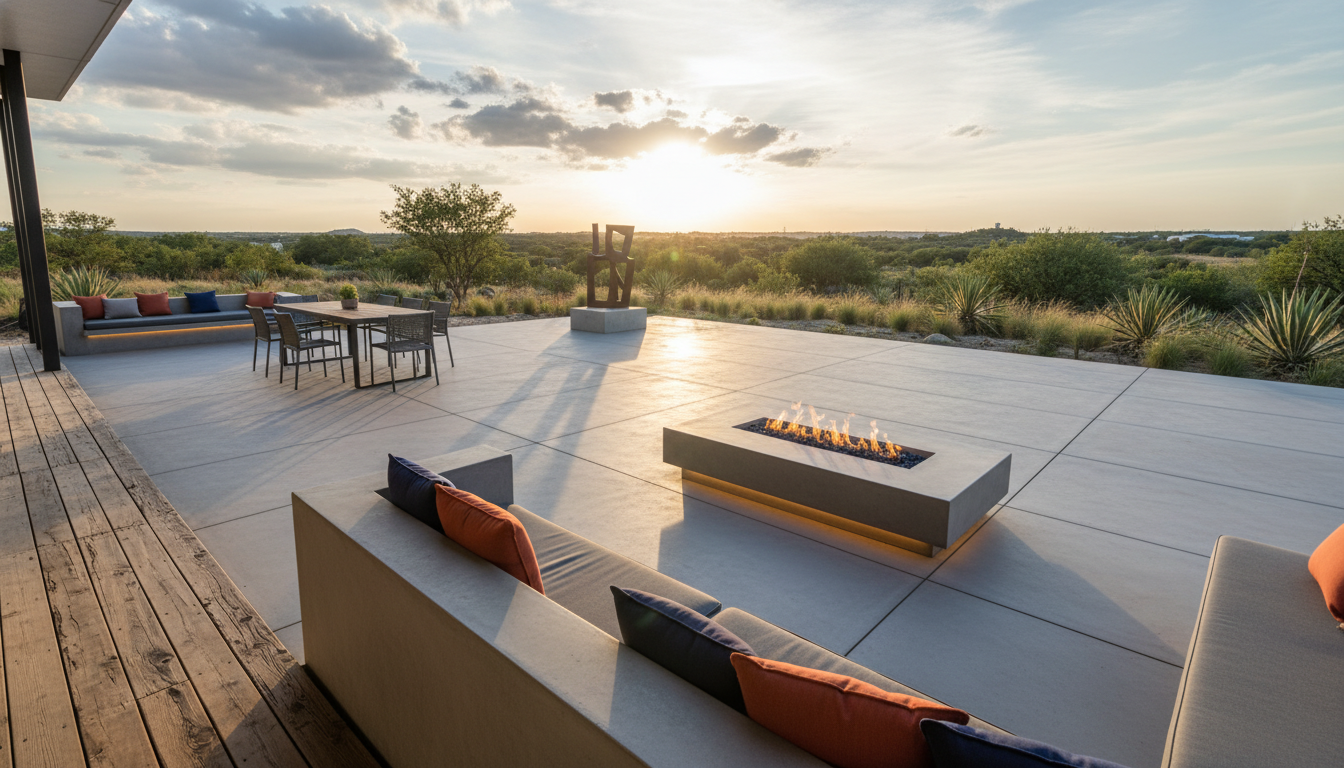
Modern concrete technology has moved far beyond the simple grey sidewalk. Today, concrete coloring and stamping techniques allow for the replication of natural stone, slate, and even wood planks. This means homeowners can achieve the warm look of a wood deck with the structural benefits of concrete. Custom borders, multi-tonal finishes, and integrated features like fire pits or seating walls can be seamlessly incorporated into a concrete design.
Wood decks offer a classic, elevated look and are often preferred for homes with significant grade changes where a slab would require massive amounts of fill dirt. However, the design options are limited by the linear nature of boards. Concrete can be poured into any shape—curved edges, organic flows around trees, or sharp modern geometric patterns—making it the superior choice for custom architectural designs that need to integrate with the existing landscape.
Environmental Impact and Sustainability
Sustainability is a major factor for the 2026 homeowner. Concrete is often criticized for its carbon footprint during production, but its longevity offsets this impact. A concrete patio can last 50 years or more, whereas a wooden deck in Texas may need full replacement every 15 to 20 years. This leads to less waste in landfills and a lower demand for timber. Additionally, concrete can be sourced locally in San Antonio, reducing transportation emissions.
Many modern concrete mixes also incorporate recycled materials or industrial byproducts like fly ash, which increases the strength of the slab while reducing the environmental load. Furthermore, the light-reflective properties of light-colored concrete can help reduce the “urban heat island” effect around your home, keeping your backyard cooler than dark-stained wood or composite decking which absorbs and retains heat throughout the evening.
Safety and Fire Resistance in the Hill Country
The Texas Hill Country is a high-risk zone for wildfires. Many local building codes are becoming stricter regarding the use of flammable materials near the home. Wood decks, especially those made from pressure-treated pine, can act as fuel during a fire event. Concrete is completely non-combustible. Choosing a concrete patio adds a layer of fire protection to your home’s perimeter, which is an often-overlooked safety benefit.
Additionally, concrete surfaces are generally safer for high-traffic areas. They do not develop splinters, and there are no nails or screws that can back out over time to cause injuries. For families with children or pets, a slip-resistant textured concrete finish provides a stable and safe surface for year-round play, regardless of the weather conditions.
The Installation Process: What to Expect
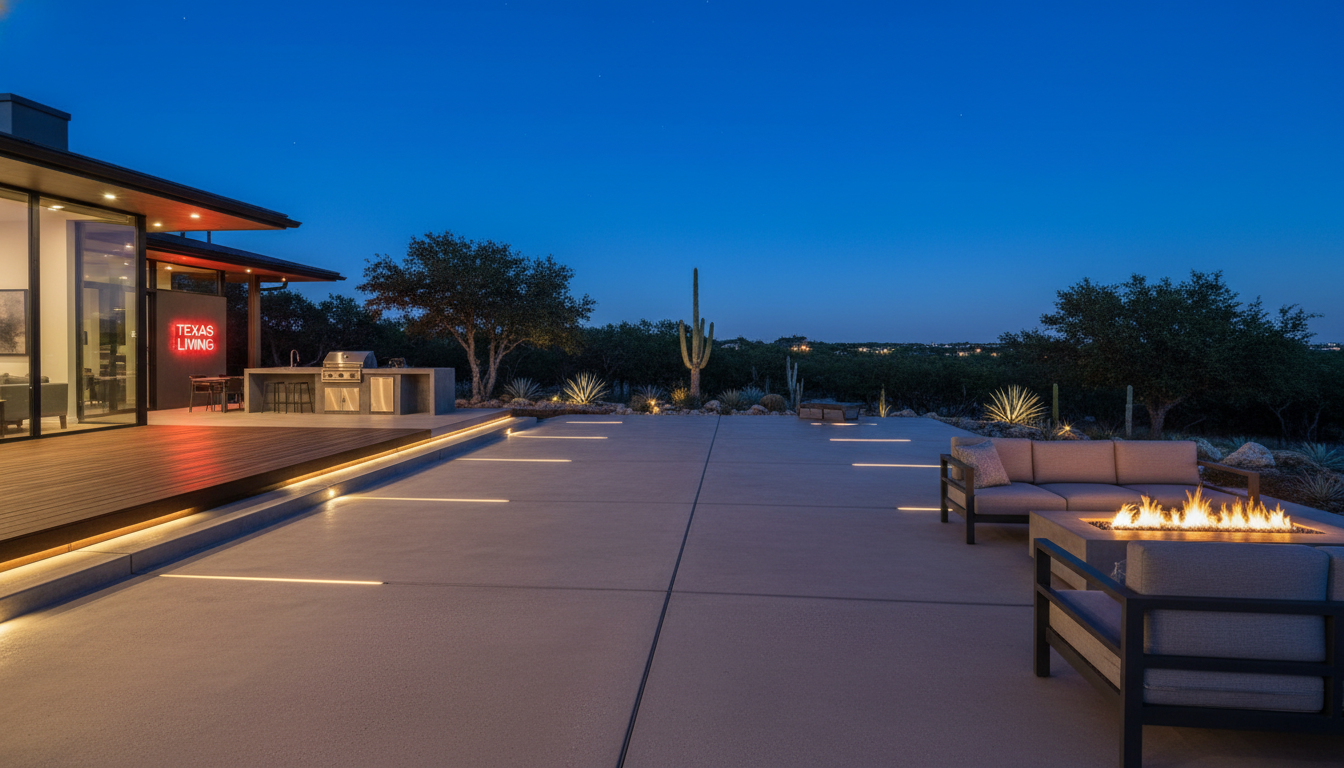
The timeline for a concrete patio is usually much shorter than a deck build. Once the site is cleared and the forms are set, the pour itself is completed in a single day. The curing process takes a few days before heavy furniture can be placed, but the primary construction disruption is minimal. A wood deck can take weeks of cutting, drilling, and assembly, involving constant noise and a longer presence of contractors on your property.
When working with a professional team like Valor Concrete Company, the process is streamlined. From the initial sidewalk installation to connect your home to the new patio, to the final sealing, every step is handled with 20 years of expertise in Texas conditions. This efficiency not only saves time but also reduces the labor costs associated with extended project timelines.
In conclusion, when we weigh the initial investment, the grueling maintenance requirements of wood, and the environmental challenges of the San Antonio area, concrete emerges as the clear winner for most Texas homeowners in 2026. While wood decks offer a specific elevated aesthetic, the advancements in stamped and colored concrete have bridged the style gap, providing the best of both worlds. By choosing concrete, you are investing in a permanent extension of your home that will withstand the sun, rain, and shifting soils for decades to come. Whether you are looking for a simple space for grilling or a complex outdoor living area with a pergola, the durability and cost-effectiveness of concrete are unmatched. For those ready to transform their backyard into a resilient oasis, contacting a specialist who understands the local geology and climate is the first step toward a successful project. We encourage you to explore the possibilities of modern masonry and see how a professionally installed patio can enhance your lifestyle and your home’s value.
For more information on high-quality outdoor installations or to start your project, visit Valor Concrete Company today.